


Hinduism: A philosophy of life.
- Feb 16, 2018
- 11 min read
"Religion is just a banana peel while the spiritual philosophy is the fruit itself."
-Anonymous.
I'm a realist and I tend to look at the world in a sensible way and religion is no exception.
From chaos to order:
It all started with a big bang. The universe started to expand at a colossal rate. The entire universe was hot and dense. The quarks collided with each other and formed elemental particles. The nuclear forces brought together the elemental particles and thus formed atoms and molecules. But the entire universe was still chaotic and messy. It was the Gravitational force which turned mere dust particles into celestial planets.
Around 200000 years ago the Homo Sapiens came into existence. They were a bunch of hunter gatherers who migrated from one region to another in search of food and shelter. The life of those hunter gatherers wasn't stable, there was a constant threat from other tribes and species either for food or territorial dominance. The life was still chaotic and messy. There was neither innovation nor invention. Around 5000 BCE, a bunch of tribes started farming the fertile lands of the river Sindhu so as to establish a stable and sustained life. Hence began one of the oldest civilizations of the world. Remember there has been no civilization which flourished or existed without a religion. Religion held these people together.
Religion, a necessary evil:
"Do good deeds and shun bad deeds" that was the basic concept of every civilization backed by a religion and the contours of good and bad were established. Now it was time to enforce them but there was a problem. On a barbaric tribe which had no sense of humanity and morality how would you enforce the concept of good and bad?
And thus the concept of an eternal omnipotent being and in the name of this being a set of ground rules were established. The fear of an invisible omnipresent entity created a sense of morality among people. In order to cement these morals folk lore and epics were composed and are passed down to the future generations either physically(books) or orally. The epics followed these rules. In a society where there was no administration these epics and folk lore acted as a constitution.
Same is the case with the Hinduism - A religion which still remains in vogue even after seven millennia. However, it is not the same as it once was.
Hinduism: A philosophy of life:
Hinduism has its roots from the Indus valley (Early Vedic) civilization which flourished near the banks of Saraswati which was later identified as Ghaggar, one of the seven tributaries of Sindhu(Sapta Sindhu) which originated from the Himalayan glaciers and finally reaching the Arabian sea near Gujarat. Remember - every civilization to ever exist originated from the river banks like the Egyptian civilization near Nile, Mesopotamian near Euphrates and Tigris and Vedic/Indus civilization near Saraswati. Readers are advised to note that the Vedic civilization is the later day manifestation of the Indus valley civilization.
-From Sindhu to Hindu:
The people of Indus valley civilization (4000 BCE) followed a Polytheistic religion. They worshiped the elements of nature and each form is personified as a deity for example fire as Agni, wind as Vayu, earth as Dhruthi. They mainly depended on agriculture and bull was their principle cattle, hence the god Pasupathi (lord of animals).
The wise and intellectual men called the Rishis composed the hymns and poems near the banks of Saraswathi and hence the Goddess Saraswathi (A deity for literature and knowledge). These poems and hymns were sung and danced to, which led to the origin of arts.
Artisans and merchants were the back bone of economy.
The working class thrived during this period. Of course these people never built gigantic structures (Pyramids) like the Egyptians did but they enjoyed a per capita income which was higher than any other contemporary civilization. They traded their goods with their contemporaries, the Assyrians (Persians) of Mesopotamia. There is a great deal of evidence that suggests the links between Rig Vedic Indians and the ancient Persians. The Avesta, the oldest and most sacred text of the Zoroastrian religion is written in a language almost identical to that of the Rig Veda. They can be read by the Rig Vedic Sanskrit by making a minor phonetic change. The Avestan 'h' is similar to that of Sanskrit 's'. Thus the word Sapta-Sindhu became Hapta-Hindu.
The Indus valley civilization flourished for over two millennia (4000 BCE-1300BCE) but faded in less than two centuries. The reason for this instant disappearance can be attributed to drying up of the source river Saraswathi. There are a lot of reasons for the drying of this river but tectonic shifts appear to have played an important role in the instant desertification of the river.
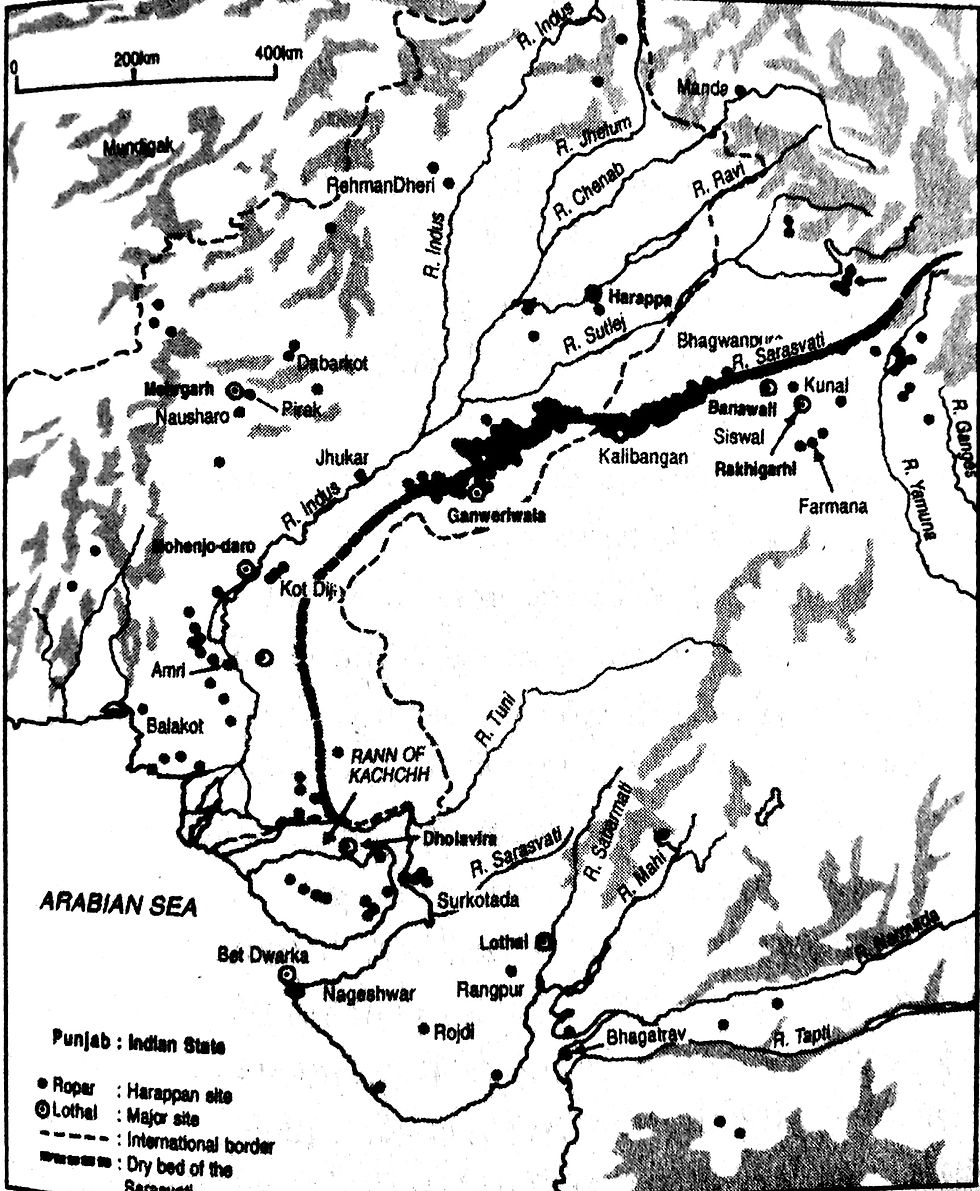
A major earth quake might have altered the course of the tributary of Saraswathi. As a result the river no longer flowed to the Arabian sea. This desertification forced the people to migrate to the inland regions of India and hence the river Ganga which was hardly mentioned twice in Rig Veda becomes an important river all of a sudden. And this marked the beginning of The Later Vedic civilization (1500 BCE- 600 BCE). So one can deduce that Indian epics were composed around this time period.
-The divine language:
We all know how important it is to have a common language in a country which has over a thousand dialects. People from the Vedic civilization realised the importance of a common language and chose Sanskrit as the common language. Not just the epics but any and all the advancements in the fields of arts, science and technology were penned down in Sanskrit. The beauty of the language lied in its ability to adapt to the changing times and openness to the foreign words. There are many words in Sanskrit which originated from Greek language.
-Deciphering the epics:
More often than not we come across people who question the authenticity of the epics Ramayana and Mahabharata. Some people look at history as political history which need authentication but these epics are not regarding political history.
The great epics Ramayana and Mahabharata have long been central to Indian culture. From religion to art and common idiom, they remain a part of everyday life. According to Indian tradition, these two epics are considered as 'Ithihasa' which literally means History. But these epics do not describe the political history but instead they give a vivid outlook about the geographical and social history. Lets take the case of Ramayana, It starts as a beautiful story of love and adventure and ends with the killing of Ravana. This is the basic theme of Ramayana and this might have taken place but the parts like the ape warrior Hanuma carrying a mountain might be fictional.

Now lets look at the geographical history of the Ramayana, It starts at Ayodhya (Present day UP) in North India and the events happen along the North-South axis all the way down to Kanyakumari (present day TN). There is a vivid description of all these places in Ramayana. Take the example of Kishkinda Kanda in which Rama comes across the monkey kingdom and meets Hanuma and Jambavan (a sloth bear). Kishkinda is a region near Tungabhadra river in the present day Karnataka. Incidentally this place is exactly how it is described in Ramayana, it is a hilly terrain with magnificent rock outcrops and caves and it is full of monkeys. And across the the river there is Sloth Bear sanctuary We can understand that even though these epics might have been a figment of imagination the writers of these epics had a clear knowledge of Indian geography and its flora and fauna.
There were many re-imaginations and interpretations of Ramayana based on the original theme of love story. Many authors interpreted it in many ways. Additional layers were added with the changing social attitudes. When Tulasidas rewrote the epic due to the influence of other religions (Islam), instead of a story about love and adventure, it became a story about the rule of law, that is when Purushottam Ram became Bhagavan Ram.
Now let us consider the other epic Mahabharata, the events take place along the East-West axis of India from Lord Krishna of Davaraka in present day Gujarat to Chitrangada (wife of Arjuna) of Manipur. Unlike Ramayana this gives a great deal of description regarding the social conditions. Take the case of Virata Parva where Arjuna assumes the role of Brihannala a transgender woman who teaches dance to princess Uttara. Imagine an ancient society which was very open regarding gender equality.
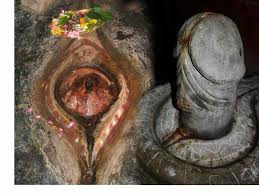
Few historians are skeptical about the authenticity of these incidents. They argue that these were added in the later period. However it was still way ahead of its time since the culture of open-mindedness in the western civilization started in the late 20th century. If you are still not convinced just look at an idol of Lord Siva, a principle god of Hindus.
So instead of questioning the meta physics of these epics one must try to understand the free thought and philosophical essence of these epics. On one hand we have Ramayana in which Rama follows the law irrespective of the cost to himself the law says to exile Sita, it breaks his heart but he still follows the law. On the other hand we have Mahabharata where we have Krishna who says whatever he does is the law, it is about gambling, killing cousins for the kingdom etc.
Ramayana tells us how the society has to be and Mahabharata shows us how the society is. Ramayana talks about an ideal society and Mahabharata shows you realities of the society.
-From tradition to compulsion:
There are many rituals and traditions which have a logical reason. Even the festivals were celebrated for a reason. Makara Sankranthi, a South Indian festival is celebrated when farmers harvest the crop.
The Indian merchants were pioneers in the marine technology at their peak India's marine trade extended from Persian Gulf in the East to the Vietnam islands of the west. One can clearly observe the influence of Hinduism on South East Asian countries. The largest temple in the world is not in India but in Cambodia. This wouldn't have been possible without the merchants. The merchants played an important role in the Indian culture.

The festival Karthika Paurnima is celebrated by the women folk where they assemble at a water body and they float a lamp on the water to bid a send off to their men folk who went on a voyage to the far away lands for trade. This ritual in Odessa is called 'Bali Jatara' which means the voyage to the Islands of Bali. Now there is a deeper meaning to this ritual. The voyage used to be very dangerous as they only relied on the monsoon winds. So the women folk assembled at the rivers to bid a farewell to their men folk. Hence it became a tradition and today this tradition is followed by not just the merchant community but by all communities.
But there are certain traditions and rituals which totally lost the relevance but are still enforced on the society. Sati is one such example. It was performed by the wives of warriors in every culture who are left vulnerable to murder or gang-rape by the enemy troops after the war. To save the humiliation and the lifelong torture it might bring to a woman, they were prepared to kill themselves beforehand. Sati is one such tradition. Previously women chose to die willingly. In later years a act of self-immolation became a matter of prestige and self respect and was enforced on women who were unwilling to sacrifice themselves. This barbaric tradition reached to its pinnacle when elders of community decided to throw even girls who were married at a very young age, into the fire. Thanks to Raja Ram Mohan Roy, this tradition was put to an end.
-The Temple banks of India:
Most of us are aware that much of Indian classical music, dance, drama, sculpture, paintings evolved in the Temples. But what we are not aware of is that these Temples acted as bankers and financiers.
The merchants and maritime trade played a crucial role in development of Indian economy. People often think that these merchants organised themselves and acted individually or were functioning under the royal umbrella. In reality they were under the protection of the merchant guilds. Thus the business was carried uninterruptedly irrespective of wars and changing rulers. Some merchant guilds even hired private mercenaries and sell swords to protect their interests. These merchants often ventured very long voyages to the faraway lands like Indonesian islands and even Vietnam. These voyages were an expensive affair and were financed by the temples.
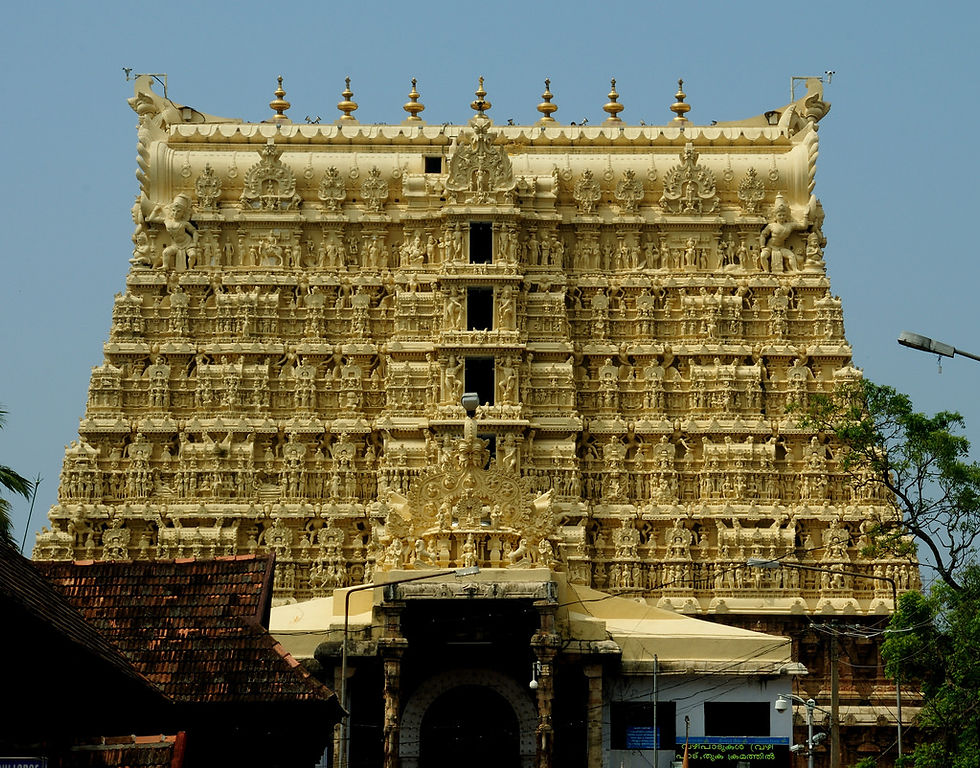
The reasons for the colossal wealth accumulation is not just because of the royal grants but because of the interests obtained from the merchant guilds.
The temples had a close relationship with the merchant and artisan guilds. It used to lend money to these guilds who in turn lent to the individual merchants.
Thus the foreign invaders like Mohammed Gori first attacked temples. They not just plundered the temples but in turn choked the economy and the maritime trade.
-From Varna to Jati:
In the Early Vedic civilization (Indus), there was no rigid framework regarding the social segregation. The merchant class and the artisans who in the present day would be considered as shudras were the richest people. Varna system was introduced by the end of Later Vedic period. In the Chatur Varna system the society and people were divided on the basis of the profession they chose to take up but not based on one's birth. For instance let us look at Valmiki who is believed to be a fisherman from a lower class but turned into a Maharshi of a higher class. Now Valmiki is born to Brahmin sage Pracheta. Since Valmiki initially chose the profession of a fishermen he was assigned to a fishermen community and later he got educated, studied Vedas and finally became a Maharshi. The marriages were made across these Varnas.
One may argue that this is an example from the epics and it can't be authenticated. Lets take the example of Chandragupta Maurya who is a born to a Shudra chieftain, Chanakya found him and trained him in the arts of warfare and administration. Chandragupta defeated the Dhana Nanda and established one of the greatest empires in the world, the Mauryan empire. After ascending the throne Chandragupta led many expeditions. In one such expedition Chandra Gupta defeated Selucus Nikator, a Greek general and married his daughter. Bindusara, the successor of Chandragupta is believed to be the son from the Greek queen.
The Varna system was very fluidic. MN Srinivas in his theory of Sanskritisation clearly mentions that a lower class could move up the totem pole. "movement has always been possible. A caste was able, in a generation or two, to rise to a higher position in the hierarchy by adopting vegetarianism and teetotalism, and by Sanskritising its ritual and pantheon". Sri Krishna Devaraya whose ancestors were Shudra by birth later became the rulers of Vijayanagara.
So, where did it go wrong and why did an open minded society suddenly become conservative?
There are many reasons for this. The Turkic invasion barricaded the exchange of technology and culture after the 1st millennia of common era. The North Western trade route which connected India with central Asia and Europe was blocked. At this period the Islamic countries saw a major cultural Renaissance. India was completely blacked out due to the Turkic invasion. Added to that, India became very conservative socially. Upper caste people, who were respected for their knowledge, found it really hard to feel proud of a son who would choose other profession. They wanted to make sure that their family name and the respect they have earned doesn’t go down in the gutter and hence they made it mandatory to have their children inherit their father’s profession. Soon, that one act of selfishness destroyed the course of history. Punya which was associated to philanthropy thus became about worshiping of the deities.
This sudden shift to conservatism even effected Sanskrit as a language. A language which was once used by mathematicians, scholars, poets and writers became very rigid. It no longer absorbed the new words which made it very difficult to keep up with the western technological advancement.
Around this period the stupid myth of 'Kala Pani' came into existence which forbade people to cross the seas. The people who were once pioneers in trigonometry and algebra became unwilling to learn simple technology such as maintaining horses. People who were once celebrated sailor merchants were later forbidden from crossing the seas.
The backbone of the civilization was its flexible and adoptable attitude but it became more and more conservative in the later centuries. This is not due to the lack of scientific innovative ideas but due to negative cultural backwardness.
No wonder why the British ruled India for almost two centuries! However, the introduction of English education changed the attitude among the people. It exposed India to the Western technological advancement. The son of a Brahmin no longer wants to practice his "ancestral" profession he wants to become an accountant. The son of a mason no longer wants to practice masonry he wants to take up law. The concept of "Pure" race which the medieval bigots dreamed of is no longer possible.
But even after this cultural renaissance India is still facing the issues on caste and gender discrimination. Maybe it is time for us to look at the true meaning and the underlying spiritual philosophy of Hinduism.
Note: I am neither a Historian nor a Researcher, most of the events and observations mentioned were read either from the books or articles. I do not claim any rights over these facts. 'The land of seven rivers' and 'The ocean of churn' of Sanjeev Sanyal had a great influence over me, I can't recommend them enough.
Comments