


Bhasha.
- May 6, 2018
- 5 min read
"There is no concept of 'freedom' if there is not a word as such"
Ever since humans have evolved, the ability to speak has been the greatest distinction between man and beast. The invention of language and script is one of the greatest inventions of the mankind. Without a language there is no communication and without communication there is no development of any sort.
Inception:

The verbal communication and the modern speech started with the evolution of Homo Sapiens. This language varied from place to place and civilization to civilization. But there was no codified writing system. Initially people started drawing images of the objects(pictographs) to communicate but it was too tedious.
Using these images the early Chinese and Egyptian civilizations came up with the concept of Logograms a.k.a Hieroglyphs. Hieroglyphs are writing systems where a picture represents a word or a phrase.
These images depending on the need represent either the image itself or the sound. For example the image of 'eye' may either represent an eye or 'i'(in English).

The problem is you need different symbols to represent every sound and every syllable.
The invention of Script and alphabets:
The people of Sinai peninsula(present day Egypt) borrowed these symbols from the Egyptian hieroglyphs, narrowed those innumerable symbols to a couple of dozens and fleshed out their edges. Now instead of using these symbols to represent a word or a phrase, these people used them to represent a particular sound.

The first symbol which looks like an Ox head is called 'alpu' which represents 'ah' sound. The second symbol which looks like a house is called 'baytu' which represents 'b' sound, 'gimel' which means a boomerang represents the 'g' sound, 'diggu' which means a fish represents the 'd' sound and so on. The Phoenicians(Isreal), the Greeks borrowed these symbols and made their own modifications in convenience of their language. And the Greeks called this system 'Alpha-Beta' i.e the first two letters of their script.
Meanwhile the Achaemenid people of Persia(Present day Iran) recreated this concept of alphabets and made their own set of alphabets in convenience of their language. The Indians borrowed these alphabets and converted them into 'Alphasyllabary' where consonant and vowels are sequences are written as a unit and thus giving birth to the 'Brahmi' script the parent script of all the Indian languages.


The Indian Context
The Birth:
In India we had two major civilizations, the Indus Valley civilization and the Vedic civilization. The language of Indus valley civilization is yet to be deciphered as the language is extinct. But the Vedic civilization which followed the Indus valley civilization used the Brahmi derivatives i.e Devanagari in the North and Dravidian in the South.
We had two dialects which were very prominent in the ancient India, Prakrit which literally means 'nature', the raw language which was spoken by the commoners and Sanskrit which means 'civilized' was used by the elite for literary works. These literary works cover a wide range of topics from epics like Mahabharata and Ramayana to economic treatise like Arthashastra to astronomical treatise like Aryabhatiya and many more. It acted like 'Lingua Franca', a bridge language. And the reason it survived for two millenia (Its inception to mid 2nd millenium of common era) is because of its adaptability and ability to intake new words. Many words in Sanskrit were derived from foreign languages like Greek and domestic languages like Tamil. Even though Panini of 6th century BCE standardized Sanskrit its ability to adapt to the new words remained.
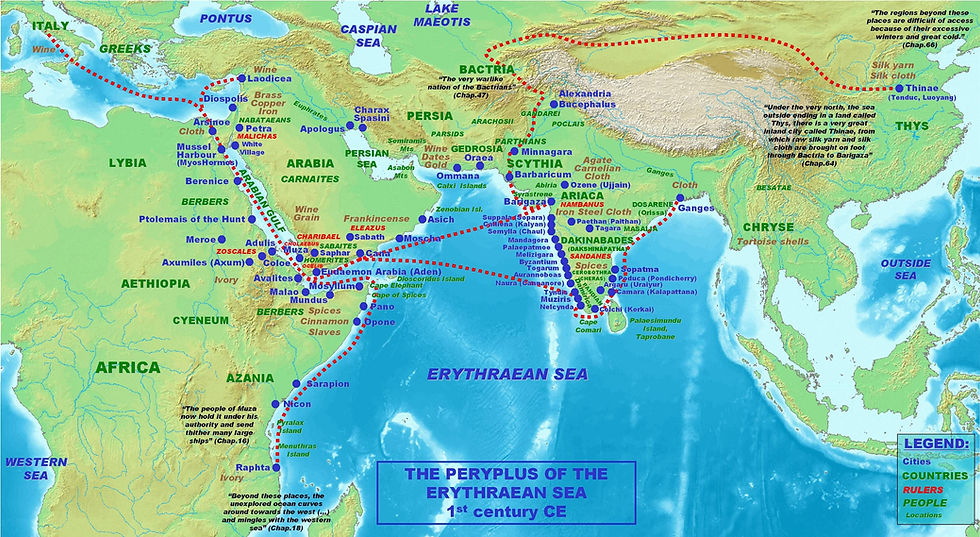
This was the period when the Indian civilization hit its rock bottom. The Indian populace become more and more conservative. Not just the attitudes but the 'devine' language, Sanskrit, became conservative. It no longer accepted new words. Without new words there was no scope for scientific and technological advancement. The Indian rulers who were once famous for their cavalry started importing horses from the Middle East as they were unable to breed horses. When the whole West was experiencing Renaissance and started the era of exploration, India barred its sailors to cross the seas.
The extinction:
A language becomes obsolete due to various reasons. Failing to adapt to the changing times, excessive standardization of the language, when people find a easier language, due to the forceful imposition, to name a few. This is exactly what happened in the case of Sanskrit. The excessive grammatization, exhaustive and myriad set rules made Sanskrit a very complex language. An average citizen found it difficult to use the language. Added to this it failed to adapt by stopping the intake of new words(It is impossible to learn the advanced postulates of quantum mechanics in Indian languages as there are no appropriate words). With the arrival of Islamic dynasties into India Sanskrit was replaced by Persian as people faced the same problem with Persian a new and easier dialects have evolved, Hindi and Urdu. With this the era of Sanskrit came to an end.
Fun fact, The word Urdu is derived from Turkic word 'Ordu' which means 'army' and the English word for a large number of people is 'horde' which is derived from 'Ordu'. Adaptability!
The aftermath:
The extinction of a language is not merely the extinction of grammar but it's the death of traditions, customs, culture, oral histories, folk lore. One might be under the impression that the effects are being overstated but this is exactly what had happened with 'Aka-Bo' an extinct Great-Adamaneese language which was spoken by the primitive tribes of Andaman islands. In 2010 'Boa.Sr' the last person to have remembered the language passed away. It is believed that the ancestors of her tribe inhabited these islands for 30,000 years and were probably the first people to have ever roamed on this continent. They remained uncontacted till the Europians colonized them in the late 18th century. And since the language was not preserved the death of Boa.Sr wiped out 30,000 years worth of traditions, customs and oral histories.
Take the example of Brahmi dialect of the Indus Valley people. The civilization is being researched for the past 100 years and the only major breakthrough is deciphering that the language is written from left end to right end and right end to left end in alternative lines. Had our ancestors been a little careful we would have had the answers for all the mysteries of Indus Valley civilization.
The survived:
Even with all the foreign invasions and forceful impositions the South Indian languages thrived. This was mainly because of its flexibility of these languages. Unlike the Western languages the Indian languages follow the 'alphasyllabary' i.e 'Abugida' where the vowel and consonants are paired as a unit. This made it difficult to break the words. Since there were rigid rules Sanskrit failed to liberalize while the Dravidian languages embraced the change and adapted. Take the case of Telugu, it is somewhat difficult to pronounce a few words in Grandhika Telugu(Classic Telugu) while it is comparatively very easy to pronounce the same words in Vaduka Telugu(Modern Telugu).
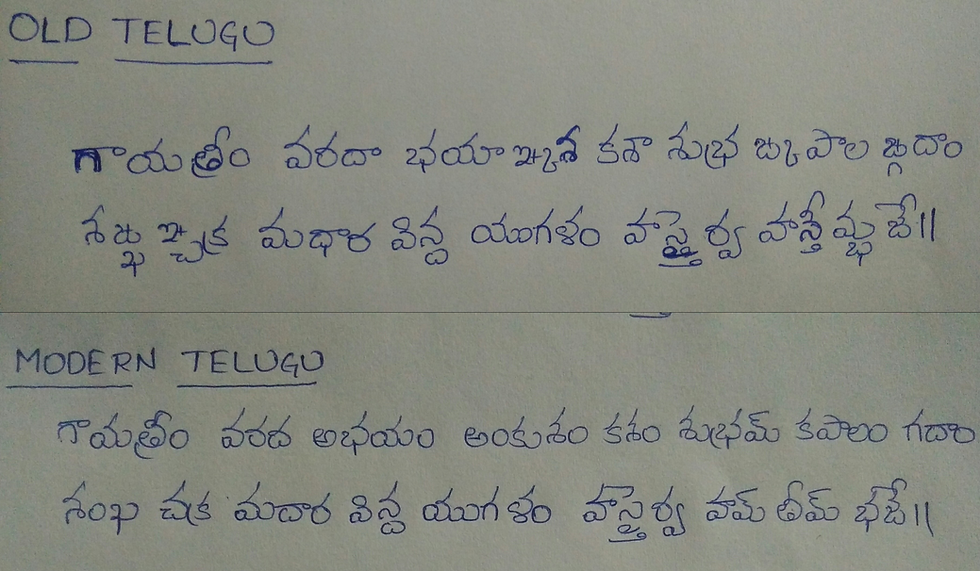
It is high time for the Indians realize and respect the regional languages and at the same it is also time, the Grammar Nazis realize the fate of Sanskrit which is only used to chant hymns but not to communicate.
So it is very important to preserve the language and the only way to do this is to speak and use it, else it will meet the fate of

For those of you who are wondering what that symbol is, it is 'alu' a Telugu Vowel(achhu) which was removed for its lack of usage. Just imagine the number of words we lost which use 'alu'.
References:
Note: I am neither a linguist nor a researcher most of the facts mentioned are from books and websites.
Comments