


Gold, a brief history of ancient money
- Sep 1, 2018
- 5 min read
If you take a closer look at our currency note you'll observe that it is nothing more than a coloured paper with a promissory note which reads "I promise to pay the bearer the sum of ...... Rupees" signed by the Governor of the Reserve Bank of India.
So, how did a circular metal disc become a universal medium of exchange? Why did people start trusting a colourful note which has no intrinsic value?
Favour and Barter
Before the dawn of civilizations the early hunter gatherers and forager groups worked on the basis of favours and reciprocation. One hunted the boar and the other returned the favour by making him boots. Neither the hunter not the shoemaker made their products to do business with other bands but rather to the survive the day.
This changed with the advent of early civilizations. Multitudes of people came together and there was a sudden need for specialization. The cobbler started to make a living out of making shoes. People started using their products as the medium of exchange giving birth to the Barter system. A farmer traded a bag of his rice for a barrel of wine. The shoemaker traded a pair of sandals for a loaf of bread.
Everything worked like a charm until people realized the value of quality, quantity and scarcity. After all, why should a Sub-Saharan brewer trade a barrel of wine for a mere bag of rice where even water is a luxury.
A new Inter-subjective reality
Inter-subjective reality is something which exists only in the consciousness of a group of people. These are shared myths which we keep on telling ourselves and to others. Most of the important drivers of history are these Inter-subjective realities like Religion, Morals, Human Rights etc. Unlike gravity and electromagnetic radiation these Inter-subjective realities only exist in the shared imagination of a group of people. The larger the group the stronger the "reality" becomes. Just to give an essence of this inter-subjective reality read the following study.
"The total sum of the money in the world is approximately $80 trillion while the total value of the currency and assets is just worth $5 trillion"
More than 90% of the money only exists in few lines of codes on our computer servers in other words the money only exists in our mind.
With the limitations of the Barter system the stage is all set to introduce a new Inter-subjective reality which could address the issue of 'a common medium of exchange', the money.
Barley Silas and cowrie shells
People used different forms of money in different parts of the world. The Mayans of North America used cocoa beans while the prisoners of Auschwitz concentration camps used cigarettes as their money(after all, money is just an imagination). But the oldest known money was Barley seeds. The ancient Sumerians(3000 B.C.E) used barley as their money, standard amounts of the grain was used to evaluate an object with the base value being a 'Sila' which is equivalent to one liter. Since barley is a food grain and pretty much anyone could grow barley if one had a farm the barley money didn't fare long. Moreover, people had to build huge silos to prevent from getting rot and also they had to guard it from rats.
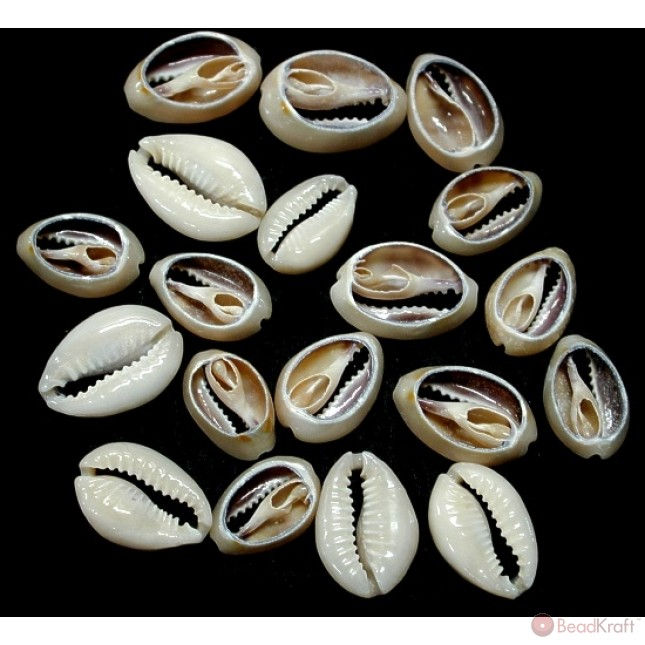
People in China and some parts of Asia used cowrie shells as their currency. Since they were both mobile but inedible they were used as currency for almost 4000 years. Cowrie shells were used to pay taxes in British Uganda till the early twentieth century. Even Indians used these shells as money and that may be the reason the Telugu people usually use the words 'chilli gavva'(చిల్లి గవ్వ) which literally means Cowrie shell.
The Golden obsession
When Hernán Cortés, a Spanish conquistador first encountered the Aztec civilization he was baffled seeing the golden statues littered all across the city. When one of the locals asked Hernán as to why his companions were so obsessed with gold he said "Because my companions and I suffer from a disease of the heart which can be cured only with gold" this obsession eventually led to the annihilation of the entire Aztec civilization.
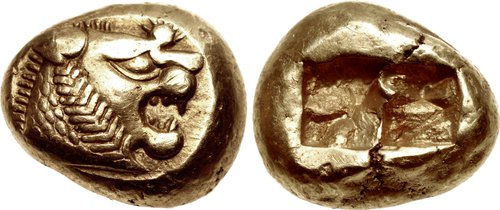
Obsession with the yellow metal isn't a new one, in fact the coinage was kick-started by gold. King Alyattes(7th century B.C.E) of Lydia(present day Turkey) was the first to issue Gold coins with standard size and standard weight. The Romans quickly adopted this monetary system made coins with gold and silver individually and called it 'Denarius' after their king. It looks just like the modern day coin with a symbol or the face of the ruler with the coin's value on one side and the promise of the king to concrete the coin's legitimacy on the other side. 'This promise' is the most significant part of the coin, the ruler assures its legitimacy and its worth. This is why counterfeiting currency isn't considered as breach of trust but as breach of sovereignty and hence the punishment is usually life imprisonment. Since the Romans controlled most of the Mediterranean region it quickly became popular all across Europe.
The Universal currency
Why did The Romans, the Indians, the Chinese and the Arabs who were historically, culturally and ethnically different from each other with independent currencies later adopted the same Gold monetary system?
Although it is impossible to ascertain as to why we got obsessed with gold, it is easy to explain how gold became a universal currency. To understand this imagine India decided to trade with Sri Lanka where gold is the currency. Since India uses Cowrie shells as currency, gold is relatively cheap. So the Sri Lankan merchants decide to buy gold cheaply from India and sell it in their country for a higher price. Soon the demand for gold in India would go sky high. At the same time with a huge influx of gold into Sri Lanka the price of gold plummets. This happens back and forth until an equilibrium is attained in both the countries resulting in using the same currency, which in this case is gold. Everyone believes in gold because everyone else also believes in gold. After all its is just a belief which we keep on reminding ourselves.
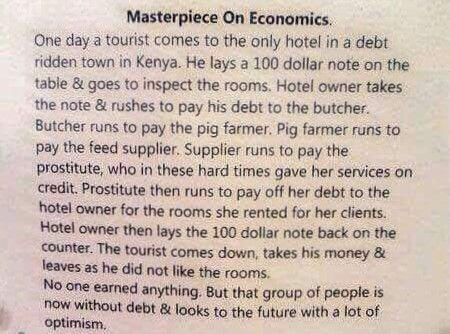
(Here in the story a single $100 bill made a business worth $500. No wonder why the total worth of money in the world is greater than the total value of the physical assets.)
This is exactly what happened in the Afro-Asian continuum. Since Rome controlled the Mediterranean it had trade relations with almost the whole Afro-Asian region. As India was a treasure house of spices, perfumes and textiles, the Romans maintained a very close trade relations with India until the fall of the former. The Roman women were so passionate about Indian muslin which is said to be as light as 'woven air'. There was an uncontrollable outflow of the Roman Denarius so much so that they ran out of gold to mint the coins. There are accounts of Pliny the elder raising the voice in the Roman senate lamenting the wasteful extravagance of the Roman women on Indian goods. They even debased their currency to stop the outflow. Interestingly the Indians accepted these coins because now they could easily counterfeit them.
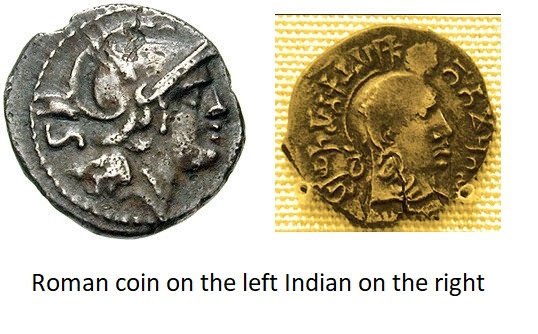
The Roman Denarius became a benchmark in India that the Indian kings even imitated Denarius so their coins would look similar. The name Denarius became so popular even in the Arabain peninsula that the Muslim Caliphs Arabicised it and called it Dinars, which is still the official currency Kuwait, Iraq, Jordan and many countries around the Mediterranean coast.
It was only after the invention of the printing press the paper currency became so popular. Since the British ruled most of the world the concept of paper currency became universal, making gold only an index of currency generation.
In a nut shell one can say that our entire monetary system is based on the delusions perpetuated by some middle eastern folks. Had these folks still been around they surely wouldn't have approved this perishable paper as their currency.
References:
Note: "Sapiens: A brief history of humankind" by Yuval Noah Harari is one of the best books on Anthropology. It had a profound influence over me. If anyone is curious enough to know the evolution of Humans, right from its inception, I strongly recommend this book. The topic which I'm going to discuss is explained in detail in the book.
Comments